Skip to content

Free Shipping on orders $150+ (excl. bulky)

Cart

Collection: Helmets

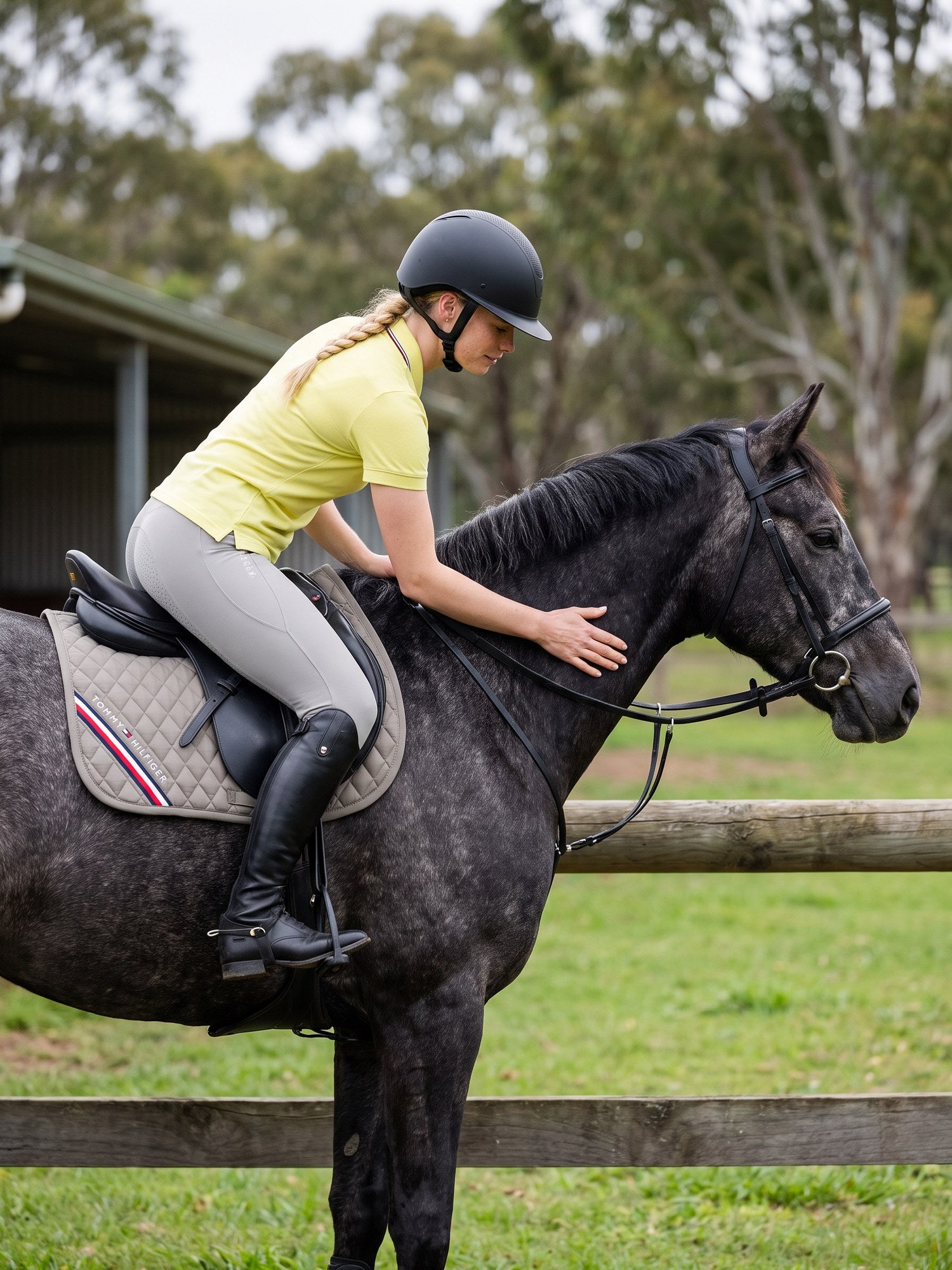
Ventilated, MIPS-equipped and traditionally finished horse riding helmets provide options for everyday riding, competition and track work. KEP helmets Australia riders can compare include polished and detailed designs, while Uvex helmets sit alongside Equinavia models. The range also covers jockey helmet shapes and styles for younger riders, with understated matte, glitter and crystal treatments represented. KEP, Uvex and Equinavia offer different profiles, ventilation layouts and adjustment systems. Head shape and fit vary between models, so try each option carefully and follow the maker's fitting guidance rather than choosing from the size label or appearance alone.

49 products

Helmet Kep Cromo 2 Textile Blue [:52cm]

Helmet Kep Cromo 2 Textile Blue

Regular price $1,285.00
Sale price Regular price
Helmet Kep Cromo 2 Textile Blue & Rose Gold [:53cm]

Helmet Kep Cromo 2 Textile Blue & Rose Gold

Regular price $1,380.00
Sale price Regular price
Helmet Kep Cromo 2 Textile Rose Gold [:52cm]

Helmet Kep Cromo 2 Textile Rose Gold

Regular price $1,380.00
Sale price Regular price
Helmet Kep Ear Muffs Pair Flat 5mm

Helmet Kep Ear Muffs Pair Flat 5mm

Regular price $59.95
Sale price Regular price
Helmet Kep Liner Oval [:55cm]

Helmet Kep Liner Oval

Regular price From $80.00
Sale price Regular price
Helmet Shade Gg 4" Brim Extra Large

Helmet Shade Gg 4" Brim Extra Large

Regular price $44.95
Sale price Regular price
Helmet Uvex Elexxion Tocsen Black [:s 55cm-56cm]

Helmet Uvex Elexxion Tocsen Black

Regular price $499.95
Sale price Regular price
Hat Cover Pom Pom Attachable Woof Wear Black & Tan

Hat Cover Pom Pom Attachable Woof Wear Black & Tan

Regular price $19.95
Sale price Regular price
Hat Cover Woof Wear Berry

Hat Cover Woof Wear Berry

Regular price $49.95
Sale price Regular price
Hat Cover Woof Wear Electric Blue

Hat Cover Woof Wear Electric Blue

Regular price $49.95
Sale price Regular price
Hat Cover Woof Wear Ocean

Hat Cover Woof Wear Ocean

Regular price $49.95
Sale price Regular price
Hat Cover Woof Wear Orange

Hat Cover Woof Wear Orange

Regular price $49.95
Sale price Regular price
Hat Cover Woof Wear Royal Red

Hat Cover Woof Wear Royal Red

Regular price $49.95
Sale price Regular price
Hat Cover Woof Wear Shiraz

Hat Cover Woof Wear Shiraz

Regular price $49.95
Sale price Regular price
Helmet Uvex Exxential Ii Mips Black [:55cm-56cm]

Helmet Uvex Exxential Ii Mips Black

Regular price $349.95
Sale price Regular price

How to Choose the Right Horse Riding Helmet

Choosing the right horse riding helmet comes down to three key factors: safety certification, correct fit and the type of riding you do. While style and appearance are important, your helmet should always fit correctly and meet the appropriate safety standards before any other consideration.

Different riding disciplines often favour different helmet styles.

Dressage Helmets

Dressage helmets typically feature a sleek, low-profile design with elegant finishes such as smooth, matte, suede-look or gloss. They are designed to complement the traditional appearance of dressage while providing the same high level of protection expected from a modern certified riding helmet.

Jumping and Eventing Helmets

Jumping and eventing helmets are designed with active riders in mind and often feature increased ventilation to improve airflow during fast-paced work. Lightweight construction and modern styling make them popular for showjumping, cross-country, eventing and everyday riding.

Pony Club and Everyday Riding Helmets

Pony Club and recreational riding helmets provide excellent protection at affordable price points. They are ideal for junior riders, beginners and everyday riding, with many models featuring adjustable fit systems, comfortable liners and excellent ventilation. Regardless of price, every helmet should meet the required safety standards.

Show Riding Helmets

Show riding helmets combine traditional styling with modern safety technology. Popular finishes include velvet, suede-look and smooth leather-look materials, making them suitable for showing, hunting and other disciplines where presentation is important.

Regardless of the discipline, the most important consideration is choosing a helmet that fits your head correctly, is comfortable to wear and complies with the safety requirements of your chosen riding organisation.

At Ascot Saddlery, our experienced team will help you find the right helmet for your riding discipline, head shape and budget. We are also certified helmet taggers, so we can correctly fit and tag eligible helmets for competition where required. If you're unsure which helmet is right for you, visit our Flemington showroom or contact us on (03) 9376 5444 for expert advice.

Understanding Helmet Safety Standards

When choosing a riding helmet, safety certification is one of the most important factors to consider. Helmets sold for equestrian use must meet recognised testing standards that assess their ability to protect riders during a range of impact scenarios.

Many modern riding helmets are certified to multiple international standards, giving riders confidence that the helmet has undergone rigorous independent testing.

Each certification assesses areas such as impact absorption, retention system strength, stability and penetration resistance. While the testing methods vary between standards, they all aim to ensure the helmet provides an appropriate level of protection for equestrian activities.

If you compete, always check the current rules of your governing body, as approved helmet standards may change over time. If you're unsure which certification you need, our experienced team can help you choose a helmet that complies with the requirements of your discipline.

MIPS and Other Helmet Safety Technologies

Many premium riding helmets now feature additional technologies designed to help manage impact forces.

MIPS (Multi-directional Impact Protection System)

MIPS is a low-friction layer positioned between the helmet shell and the liner. It is designed to allow a small amount of movement between the helmet and the rider's head during certain angled impacts, helping to manage rotational forces that can occur in a fall.

Koroyd

Koroyd uses thousands of welded tubular structures that are designed to compress in a controlled manner during an impact, helping to absorb energy while maintaining excellent airflow and ventilation.

WaveCel

WaveCel is a cellular structure engineered to flex, crumple and glide during certain impacts, providing another approach to managing impact energy.

EPS Foam Liners

Expanded Polystyrene (EPS) foam remains the foundation of most modern riding helmets. During an impact, the liner is designed to compress and absorb energy, helping reduce the forces transmitted to the rider's head.

Each manufacturer uses its own combination of materials and engineering to achieve the required safety performance. No single technology is universally considered "best". The most important factors remain choosing a current certified helmet that fits correctly, is comfortable to wear and is appropriate for your riding discipline.

At Ascot Saddlery, our experienced team can explain the differences between helmet technologies and help you choose the model that best suits your riding, budget and personal preferences.

Helmet Fit: The Three Essential Checks

Even the safest riding helmet cannot provide the level of protection it was designed to deliver if it doesn't fit correctly. A properly fitted helmet should feel secure, comfortable and remain stable while you ride.

When trying on a helmet, check these three things:

Position

The helmet should sit level on your head, with the front edge resting approximately two finger-widths above your eyebrows. It should never be tipped backwards or pulled too low over your eyes.

Fit

The helmet should feel firm and evenly snug all the way around your head without creating uncomfortable pressure points. It shouldn't move freely when you gently shake or turn your head, but it should also remain comfortable for extended periods of riding.

Chin Strap

Fasten the chin strap so you can comfortably fit two fingers between the strap and your chin. With the strap secured, gently try to move the helmet forwards, backwards and side to side. It should remain stable without excessive movement.

Head shapes vary considerably, and different helmet brands and models are designed to suit different head profiles. If one helmet doesn't feel comfortable, another model may provide a much better fit. That's why we recommend trying on several options before making your final decision whenever possible.

As certified helmet taggers, our experienced team can professionally fit your helmet and help ensure it sits correctly and complies with current competition requirements where applicable.

Helmet Sizing

Horse riding helmets are sized according to head circumference, measured in centimetres.

To measure your head, place a soft tape measure around the widest part of your head, approximately 2cm above your eyebrows and just above your ears.

These sizes are intended as a guide only. Helmet sizing and fit can vary between manufacturers and even between different models from the same brand.

If you're between sizes, the correct choice will depend on the helmet's shape, adjustment system and how it fits your head. Many modern helmets feature adjustable fit systems or interchangeable liners to achieve a more precise fit.

For children, always choose a helmet that fits correctly now rather than one to "grow into". A helmet that is too large cannot provide the level of protection it was designed to deliver.

If you're unsure about sizing, our experienced team can help you choose the right helmet before you buy, either in-store or over the phone.

When Should You Replace Your Riding Helmet?

Your riding helmet is designed to protect you during an impact. Even if damage isn't visible, the helmet's protective materials can be compromised after a fall or through normal ageing.

We recommend replacing your helmet:

  • Immediately after any significant fall or impact, even if there is no visible damage.
  • If the outer shell is cracked, dented or damaged.
  • If the harness, buckle or adjustment system becomes damaged or no longer functions correctly.
  • In accordance with the manufacturer's recommended replacement period, as the protective materials naturally deteriorate over time through normal use, age and exposure to the elements.

Never purchase a second-hand riding helmet. You cannot know whether it has been involved in a previous impact or how it has been stored, and internal damage is often impossible to detect.

If you're unsure whether your current helmet should be replaced, our experienced team will be happy to inspect it and discuss your options.

Why Buy Your Riding Helmet from Ascot Saddlery?

At Ascot Saddlery, we've been helping Australian riders choose quality riding equipment since 1977.

Our achievements include:

  • Saddleworld Store of the Year – 2007 and 2010.
  • PDS, Pessoa & Trainers Dealer of the Year – 2024 (Inaugural Award) and 2025.

Choosing a riding helmet is about much more than selecting a size or colour. Correct fit is essential, and different helmet brands and models are designed to suit different head shapes.

Our experienced team will take the time to help you find a helmet that fits correctly, is comfortable to wear and meets the requirements of your chosen riding discipline.

We are also certified helmet taggers, allowing us to professionally fit and tag eligible helmets for competition where required.

If you're purchasing a helmet for a child, we strongly recommend visiting our Flemington showroom for a professional fitting. Children's helmets should be checked regularly as they grow to ensure they continue to provide the correct fit and level of protection.

Buying a Riding Helmet Online

If you can't visit our showroom, we're committed to making online helmet shopping as easy and stress-free as possible.

When you purchase from Ascot Saddlery you'll enjoy:

  • Detailed product descriptions, specifications and sizing information.
  • Advice from our experienced equestrian team before you buy.
  • Free Australia-wide shipping on eligible orders over $150.
  • Returns and exchanges in accordance with our published policy if the helmet isn't the correct size (please try the helmet on indoors and keep it in new condition).
  • Finance options available on selected premium helmet models.

You can also complete your riding safety equipment with our range of body protectors, helmet accessories, replacement helmet liners, hat reducing tape, riding glasses and goggles, helping you stay comfortable and protected every time you ride.

Still need help?

Whether you're new to horses or know exactly what you're looking for, our experienced team is here to help with honest, practical advice.

Ask Our Team

Discover more in our FAQs

What helmet certification should I look for in Australia?

Choose a helmet that meets a recognised equestrian safety standard and is approved for your intended use. Many helmets sold in Australia carry multiple international certifications, such as AS/NZS 3838, PAS 015, VG1 and ASTM F1163.

If you compete, always check the current rules of your governing body, as approved helmet standards may change over time. If you're unsure, our experienced team can help you select a helmet that meets the requirements of your discipline.

How do I measure my head for a riding helmet?

Use a soft tape measure around the widest part of your head, approximately 2cm above your eyebrows and just above your ears. Measure in centimetres and compare the result with the manufacturer's sizing guide.

Different brands and models fit differently, so your measurement is only a starting point. If you're between sizes or unsure which helmet will suit your head shape, we're happy to help.

Is MIPS worth paying extra for?

MIPS (Multi-directional Impact Protection System) is designed to help manage rotational forces that can occur during certain angled impacts. Many riders choose MIPS-equipped helmets for the additional technology they provide.

Ultimately, the most important factors are choosing a current certified helmet that fits correctly and is appropriate for your riding discipline. MIPS is an additional feature that some riders choose depending on their preferences and budget.

How often should I replace my riding helmet?

Replace your helmet immediately after any significant fall or impact, even if there is no visible damage.

If your helmet has not been involved in an impact, follow the manufacturer's recommended replacement guidelines. Helmets naturally deteriorate over time through normal use, ageing and exposure to sunlight, heat and moisture.

Replace your helmet sooner if the shell, liner, harness or adjustment system shows signs of damage or excessive wear.

Can I buy a second-hand riding helmet?

We strongly recommend purchasing a new helmet.

A second-hand helmet may have hidden damage from a previous impact, even if the outer shell appears undamaged. You also cannot know how it has been stored or whether it has been exposed to excessive heat, sunlight or other conditions that may affect its performance.

Your helmet is your most important piece of safety equipment, so buying new is always the safest option.

What is the difference between a dressage helmet and a jumping helmet?

Both dressage and jumping helmets are designed to provide the same essential level of rider protection when they meet recognised safety standards.

Dressage helmets generally feature a refined, low-profile appearance with elegant finishes, while jumping helmets often place greater emphasis on ventilation and lightweight construction for active riding.

The best helmet is the one that fits correctly, meets the required safety standards and suits your chosen discipline.

Do you sell Pony Club riding helmets?

Yes. We stock a wide range of certified riding helmets suitable for Pony Club riders, from trusted brands including KEP Italia, Champion, Eurohunter and others.

Our experienced team can help you choose a helmet that fits correctly and meets current Pony Club requirements.

What helmet brands do you stock?

We stock one of Australia's leading ranges of horse riding helmets, including KEP Italia, Uvex, Champion, Eurohunter, Horze, Equinavia and selected premium brands.

Different brands and models are designed to suit different head shapes, so our experienced team can help you compare the options and find the helmet that provides the best fit.

Does a helmet with multiple certifications offer more protection?

Not necessarily.

Multiple certifications simply mean the helmet has been tested to more than one recognised safety standard. The most important considerations are that your helmet meets the requirements of your riding discipline, fits correctly and is worn and adjusted properly every time you ride.

Do I need a body protector as well as a riding helmet?

A riding helmet protects your head, while a body protector helps protect your torso. They perform different functions and one does not replace the other.

Body protectors are commonly worn for cross-country, eventing, Pony Club activities and other higher-risk disciplines. If you're unsure which type is best for your riding, our experienced team can help you choose the most appropriate option.

Can you professionally fit my riding helmet?

Yes. Our experienced team can professionally fit your helmet to help ensure it is comfortable, secure and appropriate for your riding discipline.

We are also certified helmet taggers, allowing us to professionally fit and tag eligible helmets for competition where required. If possible, we recommend visiting our Flemington showroom for a professional fitting before purchasing your new helmet.