

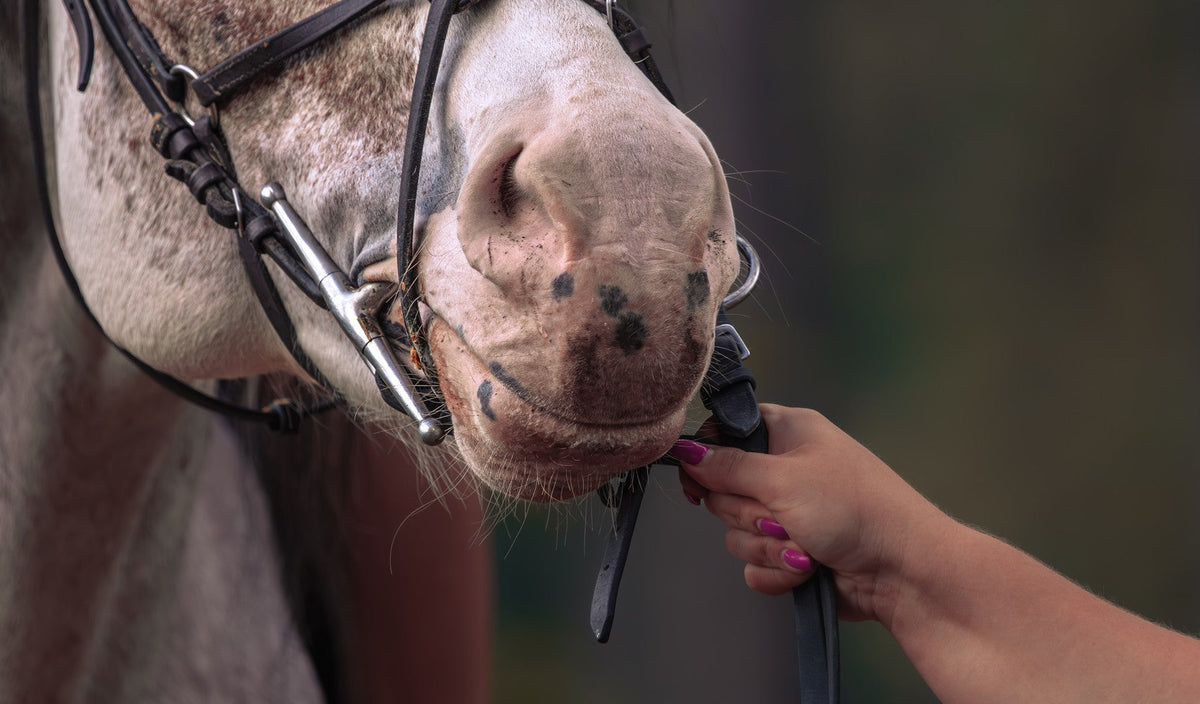
Choosing a horse bit begins with understanding how its construction, fit and your rein contact affect your horse. The name on the packet matters less than where the bit applies pressure, how it sits in the mouth and how your horse responds.
A horse that opens its mouth, puts its tongue over the bit, leans, crosses its jaw or rushes is giving you information, but not necessarily asking for a stronger bit. Teeth, bridle adjustment, noseband pressure, training, rider balance and saddle fit may all contribute. Start by investigating the cause before changing equipment.
This guide explains the main bit actions and mouthpieces, what to check when fitting, and why competition legality depends on the exact design and discipline.
A bit is a conversation, not a brake
A bit carries signals from your hands through the reins. Your horse learns from pressure and release, so the timing of your release matters as much as the equipment. Fixed or inconsistent hands can make even a mild-looking snaffle uncomfortable or confusing.
Appearance alone does not tell you how a bit will feel. A thick mouthpiece may take up too much room in a small mouth or one with a fleshy tongue. A thinner mouthpiece concentrates pressure over a smaller area, but its effect also depends on its shape, cheek design and rein contact.
Seat, leg, balance and rein should work together. If the rein is being asked to replace the other aids, a different bit may change the symptoms without resolving the cause.
Where does a bit apply pressure?
Depending on its design and use, a bitted bridle can affect the tongue, bars, lips, palate, poll and, in curb arrangements the groove beneath the lower jaw.
Tongue: The tongue occupies much of the available mouth space and cushions the mouthpiece. A bulky bit may compress a large tongue, particularly when there is limited clearance beneath the palate. Mouth opening or tongue movement deserves investigation, although neither identifies a single cause.
Bars: These are the toothless sections of the lower jaw between the front teeth and cheek teeth. The tissues covering them offer limited cushioning, making concentrated pressure a concern.
Lips: The mouthpiece and cheeks affect the corners of the mouth. Loose rings need enough clearance to avoid drawing the lips into the ring holes. Fixed cheeks provide more stability, but are not automatically mild.
Palate: Contact depends on mouth conformation, mouthpiece shape and movement under rein tension. The familiar claim that every single-jointed bit drives into the roof of every horse’s mouth is an oversimplification.
Poll and curb groove: Leverage and gag arrangements can transmit pressure through the bridle or beneath the jaw. Their effects depend on the complete setup, including rein attachment and any curb chain or strap. A hanging-cheek baucher should not be treated as equivalent to a shanked curb bit.
Separate the mouthpiece from the cheek

The mouthpiece determines much of the sensation inside the mouth. The cheek influences stability, lateral guidance and how the rein signal is delivered.
A loose ring allows relatively free movement. Some horses settle with that mobility; others prefer the steadier feel of an eggbutt or D-ring. Full cheeks provide additional lateral guidance and may help with turning. Keepers can affect their position and action, so check the fitting instructions and relevant rules.
Bevels, multi-ring bits and shanked designs can change the action when the reins are attached below the mouthpiece. A jointed mouthpiece does not make these ordinary snaffles.
When comparing bits, ask whether your horse needs a different mouthpiece sensation or a different delivery of the rein aid. Changing both at once makes it harder to identify what helped.
Snaffle, curb and gag actions
A snaffle works through direct rein action without a shank-based leverage mechanism. The term describes the action, not the number of joints. An unjointed mullen mouth can be a snaffle, while a jointed mouthpiece can be part of a leverage bit.
A curb bit uses an upper purchase and lower shank. Rein tension rotates the cheek, with the mouthpiece, bridle and curb chain or strap contributing to its action. Shank proportions influence leverage, but do not provide a complete measure of severity.
The curb chain or strap limits rotation and acts beneath the jaw. Its adjustment affects when that action begins. It should sit correctly, without twists, and be fitted to the individual bit and horse.
A Pelham offers snaffle and curb rein positions on one bit. A Weymouth is the curb used with a separate bridoon in a double bridle. A Kimblewick provides curb action through a more compact cheek.
The term gag covers several constructions. A running gag uses straps or ropes that slide through the cheeks; multi-ring bits often called Dutch or Continental gags operate differently. Neither should be assumed to act like an ordinary snaffle.
“Tom Thumb” also describes different designs. A model with shanks and curb action is a leverage bit, regardless of its jointed mouthpiece. Identify the construction rather than relying on the name.
Mouthpieces compared
Single joint
A single-jointed mouthpiece folds at its central joint. Its curve, thickness and joint proportions affect how it sits and distributes pressure. Some horses respond well to its action; others prefer a different shape.
French link and lozenge

Both have two joints, but they are not the same. A French link has a flatter central plate; a lozenge has a rounded centre section. Size, orientation and movement under contact matter as much as the label.
A Dr Bristol also has a flat central plate, but its orientation differs and can present a narrower edge to the tongue. It should not be confused with a French link. EA’s 2026 Dressage Equipment Annex lists the Dr Bristol as non-permitted, with elimination as the consequence of use.
Mullen mouth
A mullen is unjointed and usually curved. It can provide a stable feel, but the room available for the tongue depends on its shape and thickness. Rigid and flexible versions behave differently.
Ported mouthpieces
A port raises part of the mouthpiece above the tongue. Its height, width and overall shape influence tongue clearance and possible contact elsewhere in the mouth. A ported curb must also be assessed with its shanks and curb arrangement.
Putting the tongue over the bit is not, by itself, a reason to buy a ported mouthpiece.
Rubber and synthetic bits: check more than the surface
Rubber and synthetic mouthpieces may suit some horses, but a softer-feeling surface does not automatically create a gentler action. Extra thickness can be uncomfortable where mouth space is limited.
Inspect these mouthpieces before every use. Chewing can leave rough or sharp areas, and a damaged mouthpiece should be replaced. Check metal bits too, particularly their joints and moving parts.
Construction also affects legality. Pony Club Australia’s rules prohibit flexible plastic, polymer or rubber bits without an inner core, and exclude rubber-and-chain constructions. Check the exact model rather than assuming all Happy Mouth or other synthetic bits share the same core.
EA dressage has separate material and covering requirements. General-riding suitability does not establish competition approval.
Getting the fit right
Bit fit includes width, diameter, shape and height.
Measure an existing mouthpiece between the inside edges of the cheeks, excluding the rings. A purpose-made bit measure can provide a starting point, but the result must be checked with the bit fitted to the horse.
For loose rings and other movable-ring bits, Pony Club Australia’s fitting guidance specifies that the lips should clear the ring holes by 1 to 3 mm on each side. This is more precise than simply measuring a gap to the outside of the ring. Fixed cheeks generally need a snug fit that avoids pinching or excessive sideways movement.
Pony Club specifies a minimum mouthpiece thickness of 10 mm, measured near the cheek, and gives 11 to 17 mm as guidance while recognising differences between horses. These figures do not establish the most comfortable diameter for an individual horse, and other disciplines have their own requirements.
The same rules advise against using “two wrinkles” as a universal height setting. Adjust the cheekpieces to the horse’s anatomy and the bit’s design. Check that the bit is not pulled unnecessarily high or hanging where it may interfere with the teeth.
Observe the horse both at rest and under saddle. Consider the jaw, tongue, contact, neck posture and willingness to go forward. Mouth movement does not automatically mean discomfort, and a still mouth does not prove comfort.
Is your bit legal where you compete?
Rules checked: 8 October 2026. This section refers to EA’s National Dressage Rules and Equipment Annex effective 1 January 2026, and Pony Club Australia’s January 2026 National Gear Rules. Check the current documents and any amendments before competing.
EA dressage
The Equipment Annex lists the Dr Bristol, B-ring snaffle, control-plate centre links, bevel cheeks, gag cheeks and full cheeks with extra rings as non-permitted. It also identifies prohibited swivel designs, mouthpieces with holes, jointed or rotating curb mouthpieces, and bit guards.
Myler or similar cheeks for use with hooks are listed as non-permitted. Some Myler snaffle constructions are illustrated as permitted, but a brand name alone does not establish legality. Check the exact cheek, mouthpiece and attachment arrangement.
Use the illustrations alongside Section 5 of the rulebook. The absence of a bit from the annex does not imply approval.
Pony Club Australia
Pony Club uses its own discipline-specific framework. Its prohibited examples include Waterford, Cherry Roller, Magenis, American gag, Elevator, Butterfly, Argentine, Bomber and Taylor Tom Thumb, Pee Wee, Western and corrective racing designs, as well as hackamores and specified twisted designs.
Running gags are prohibited in every discipline, and exemptions are not granted. Some multi-ring gag designs are permitted outside dressage, subject to the relevant requirements. Avoid treating all bits sold as “gags” as one category.
Bit guards are permitted in relevant Pony Club activities except Group C dressage, provided they meet the construction and fitting requirements.
Check the exact class and setup
EA dressage rules do not automatically apply to every eventing, jumping or showing class. If you compete under another association, use its rules too.
When seeking clarification, provide clear photographs of the complete bit, its mouthpiece and rein attachments, together with the discipline and class. Ask the governing body or designated equipment official to resolve uncertain legality before the event.
Official references:
- Equestrian Australia Dressage Rules and Equipment Annex
- Pony Club Australia National Gear Rules and Addendum
Understanding Myler bits
Myler groups its mouthpieces into Level 1, Level 2, Level 2-3 and Level 3. The manufacturer’s system considers tongue relief and the horse’s education; it is not a universal ranking of comfort or suitability.
Myler designs may include curved mouthpieces, barrels, ports and independent side movement. The cheek and rein attachment still determine how the signal reaches the mouthpiece and whether leverage is introduced.
Choose by the individual horse and complete construction, rather than assuming a more advanced horse needs a higher level. The manufacturer’s guidance can help explain its designs, but does not replace fitting, training advice or competition-rule checks.
Before buying a stronger bit
Work through these checks first:
- Dental comfort: Arrange an appropriate assessment for possible sharp points, ulcers, retained caps or other dental problems.
- Equipment fit: Check width, thickness, height, joints, surface condition and bridle adjustment.
- Noseband fit: A restrictive noseband may limit jaw movement or conceal discomfort without addressing its cause.
- Rider and training: Ask an instructor to assess your balance, hands, contact and the horse’s understanding of the aids.
- Whole-horse comfort: Consider soundness, back comfort, saddle fit, workload and changes in behaviour.
If a different bit is appropriate, change one variable where practical and assess the horse’s response with experienced help. The answer may be another model, an adjustment, treatment or a change in riding, not necessarily a purchase.
Quick answers
What is the most comfortable or kindest bit?
There is no single answer for every horse. A suitable bit fits the mouth, matches the horse’s education and is used with clear, consistent aids and a timely release. Thick, flexible or expensive does not automatically mean kinder.
Why does my horse put its tongue over the bit?
Possible contributors include dental discomfort, bit fit, limited tongue room, noseband restriction and rein contact. Investigate these before choosing a ported or stronger bit.
Can I use the same bit for Pony Club and EA dressage?
Sometimes. Check its exact mouthpiece, cheek, material and attachments in both sets of rules. Approval in one does not guarantee approval in the other.
Where to start at Ascot Saddlery
Bring your current bit or bridle, photographs and details of the riding and competition you do. Our team can help you compare constructions and identify questions to take to your coach, veterinarian, dental practitioner or bit-fitting professional.
Phone Ascot Saddlery on (03) 9376 5444 or visit our Flemington store. Saddle-fitting appointments are booked by phone.
Ascot Saddlery was established in Ascot Vale in 1977 and moved to larger Flemington premises in 1993. Our approach remains practical: equipment should have a clear purpose and suit the horse and rider using it.
Products discussed in this guide
These examples illustrate different constructions; they are not recommendations for every horse or confirmations of competition legality. Check each model’s fit, specifications and permitted use before purchasing. Follow the product listing for current pricing and availability.


